
Crewed missions since Apollo
Back to the Moon
Twenty-four people flew to the Moon between 1968 and 1972. Then no one went for more than half a century, until four astronauts swung around the far side in April 2026. Here is that flight, the landings planned next, and the plans that never left the ground.
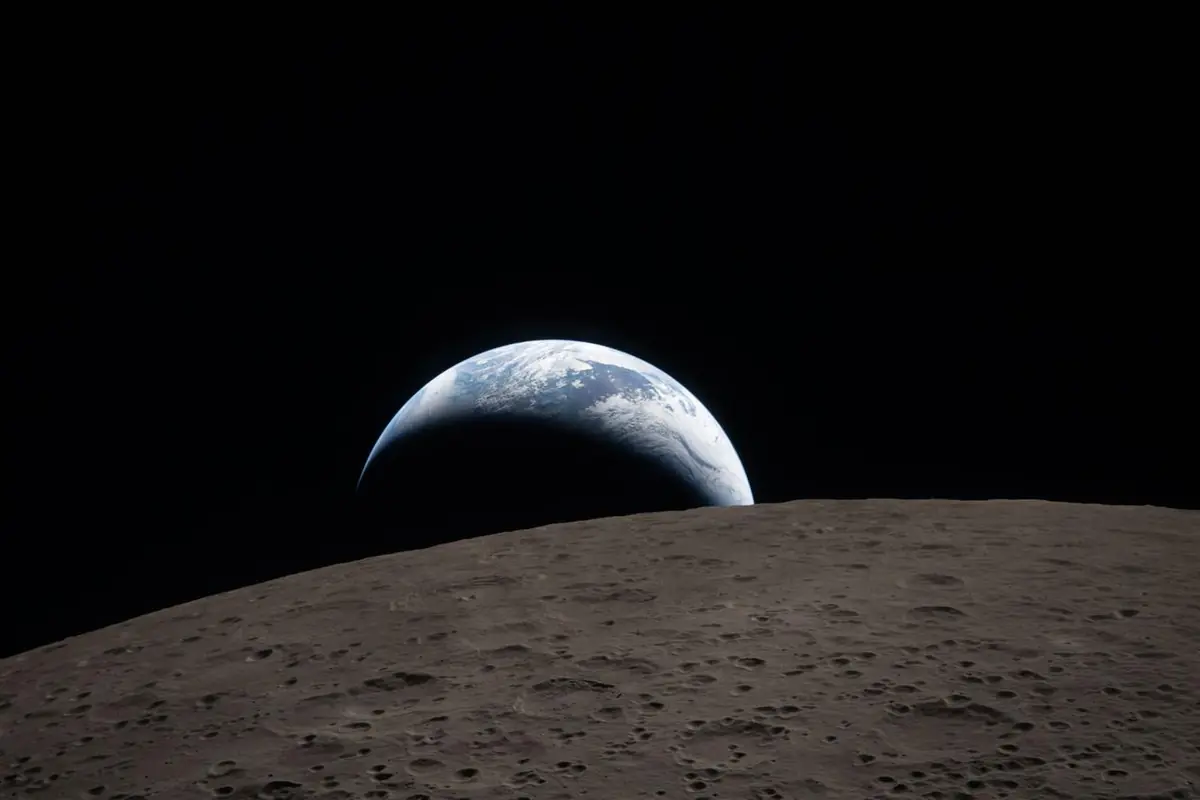
-
53 years
from Apollo 17's splashdown in December 1972 to Artemis II's launch in April 2026
Sources
- NASA History (R. W. Orloff)Apollo by the Numbers: A Statistical Reference, NASA SP-2000-4029
- NASANASA welcomes record-setting Artemis II moonfarers back to Earth
-
406,771 km252,756 miles
from Earth on 6 April 2026, the farthest people have ever traveled
Sources
- NASANASA welcomes record-setting Artemis II moonfarers back to Earth
- Associated Press (via OPB)Artemis II astronauts return from Moon with a splashdown to close out a record-breaking lunar voyage
- 6,545 km4,067 miles above the far side at Artemis II's closest approach
-
28
people have now flown to the Moon, and 12 of them walked on it
Sources
- NASA History (R. W. Orloff)Apollo by the Numbers: A Statistical Reference, NASA SP-2000-4029
- NASA ScienceMoonwalkers
- NASANASA welcomes record-setting Artemis II moonfarers back to Earth
Artemis II
1 to 10 April 2026. The first people to fly to the Moon since Apollo 17.
Artemis II was the first crewed flight of NASA's Space Launch System rocket and Orion spacecraft. It did not land or even go into orbit around the Moon: like Apollo 13, it swung once around the far side and came straight home, a test of everything the landings will depend on.
Sources
- NASANASA welcomes record-setting Artemis II moonfarers back to Earth
- Associated Press (via OPB)Artemis II astronauts return from Moon with a splashdown to close out a record-breaking lunar voyage
The crew
-
Reid Wiseman
Commander · NASA
From Baltimore, Maryland
A Navy test pilot for 27 years who spent nearly six months on the International Space Station in 2014. He commanded the flight around the Moon.
His wife, Carroll, a newborn intensive care nurse, died in 2020. He calls his years since as an only parent to their two children the hardest and most rewarding of his life.
-
Victor Glover
Pilot · NASA
From Pomona, California
A Navy fighter pilot who spent 168 days on the space station in 2020 and 2021 and made four spacewalks.
He grew up chasing speed. In the Navy a commanding officer named him Ike, short for I Know Everything, and the name stuck. He and his wife, Dionna, have four children.
The first Black astronaut to travel beyond low Earth orbit
-
Christina Koch
Mission specialist · NASA
From Grand Rapids, Michigan, and Jacksonville, North Carolina
An engineer who holds the record for the longest single spaceflight by a woman, 328 days, and took part in the first all-woman spacewalks.
Before NASA she spent a year at the South Pole, winter included, on its firefighting and rescue teams, then worked at Palmer Station in Antarctica and Summit Station in Greenland.
The first woman to travel to the Moon
-
Jeremy Hansen
Mission specialist · Canadian Space Agency
From A farm near Ailsa Craig, Ontario
A Canadian fighter pilot on his first spaceflight. He joined the air cadets at 12 and earned glider wings at 16.
His family's encyclopedias arrived one volume at a time, and he never got past A: first for the airplanes, then for Neil Armstrong on the Moon. Around the Moon he carried pendants set with his family's birthstones.
The first person from outside the United States to leave low Earth orbit
The flight
-
1 April
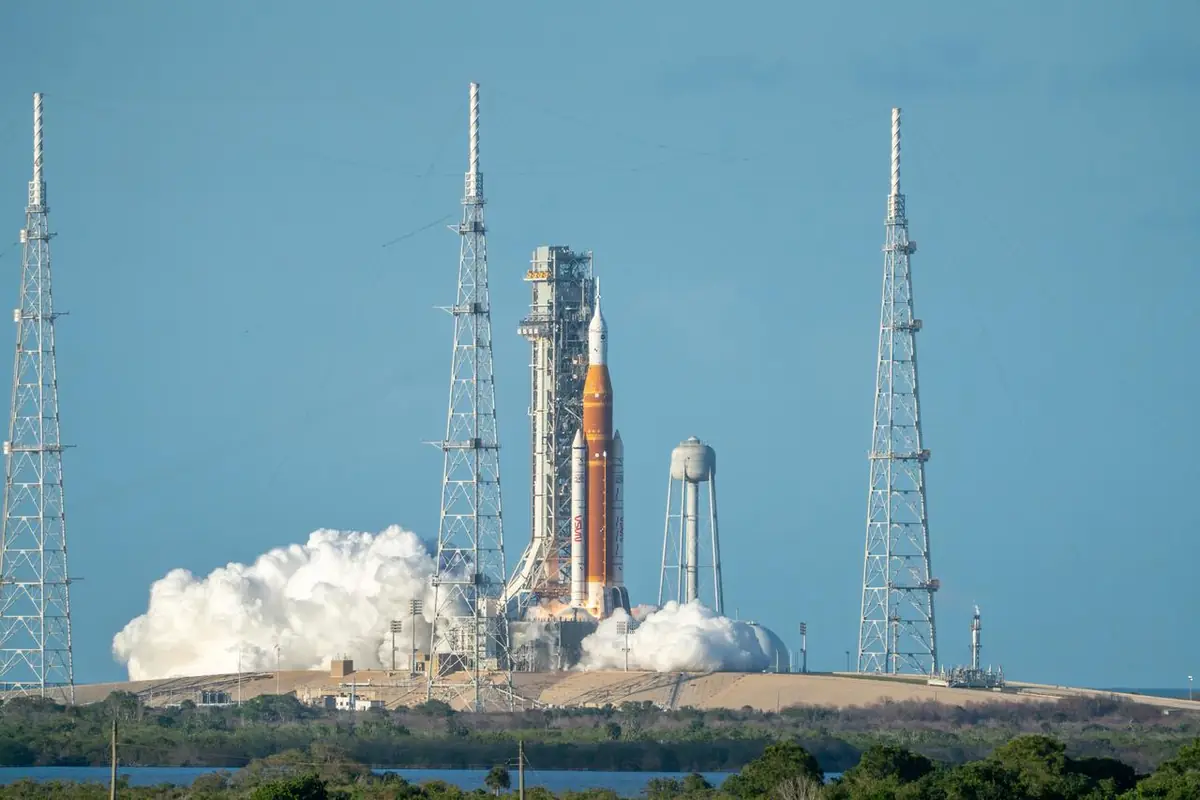
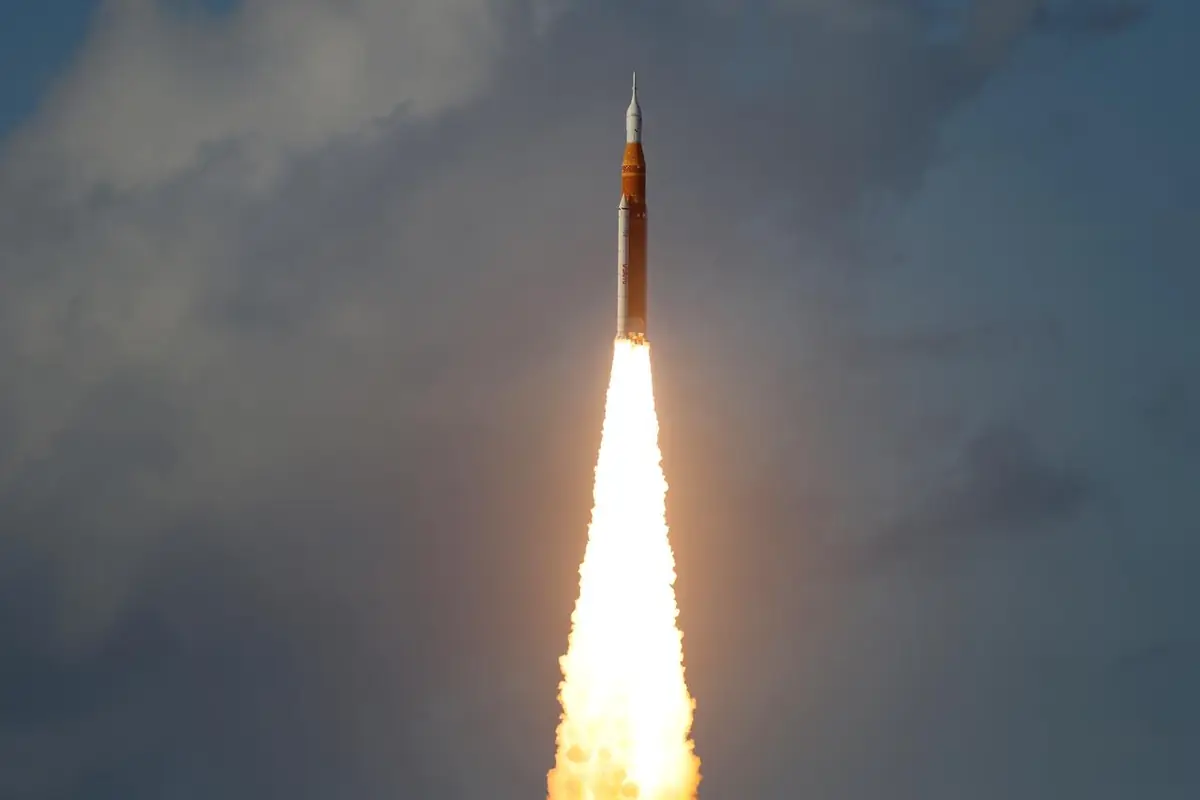
The Space Launch System lifted off from Launch Pad 39B at the Kennedy Space Center at 6:35 p.m. local time (22:35 UTC). The crew named their capsule Integrity, checked it out in a high orbit around Earth, and released four small satellites from partner countries.
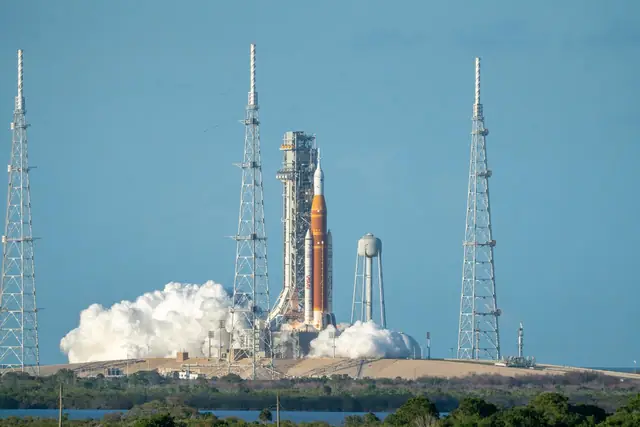
Liftoff from Launch Complex 39B, 1 April. Photo: NASA/Brandon Hancock -
2 April
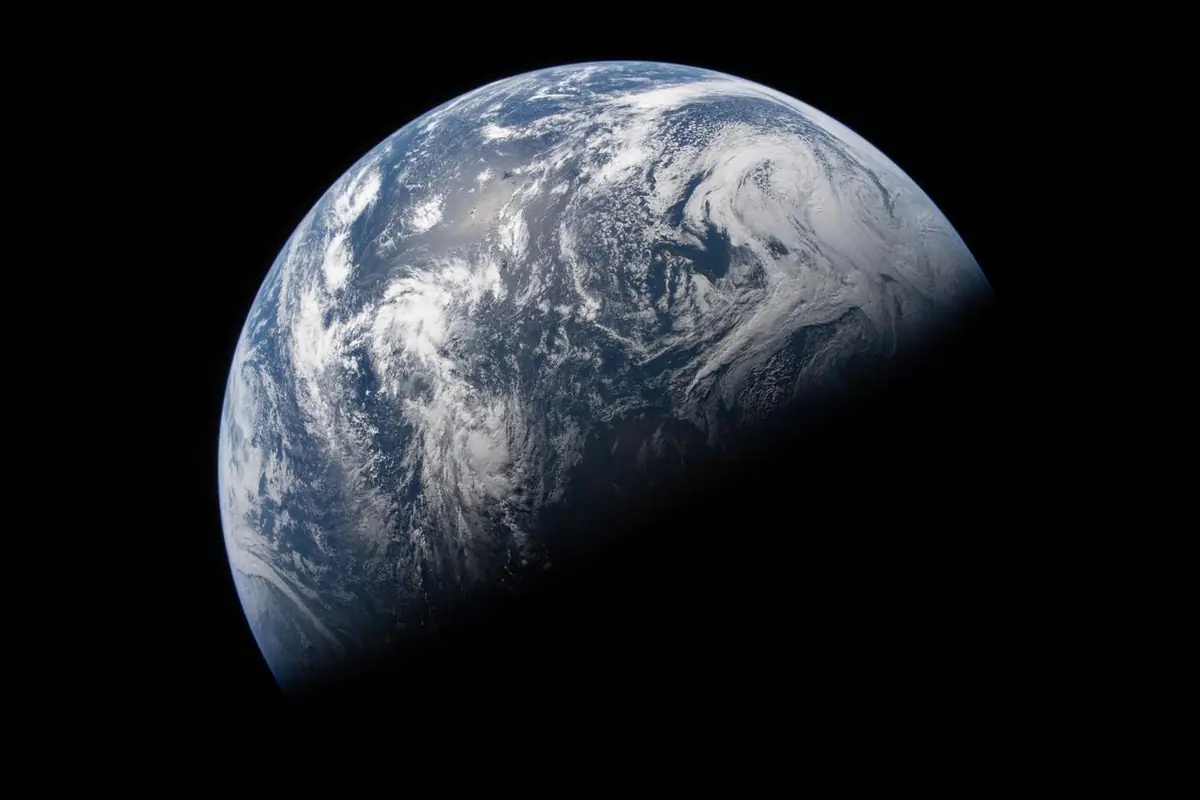
Orion's service module fired its main engine to put the crew on course for the Moon.

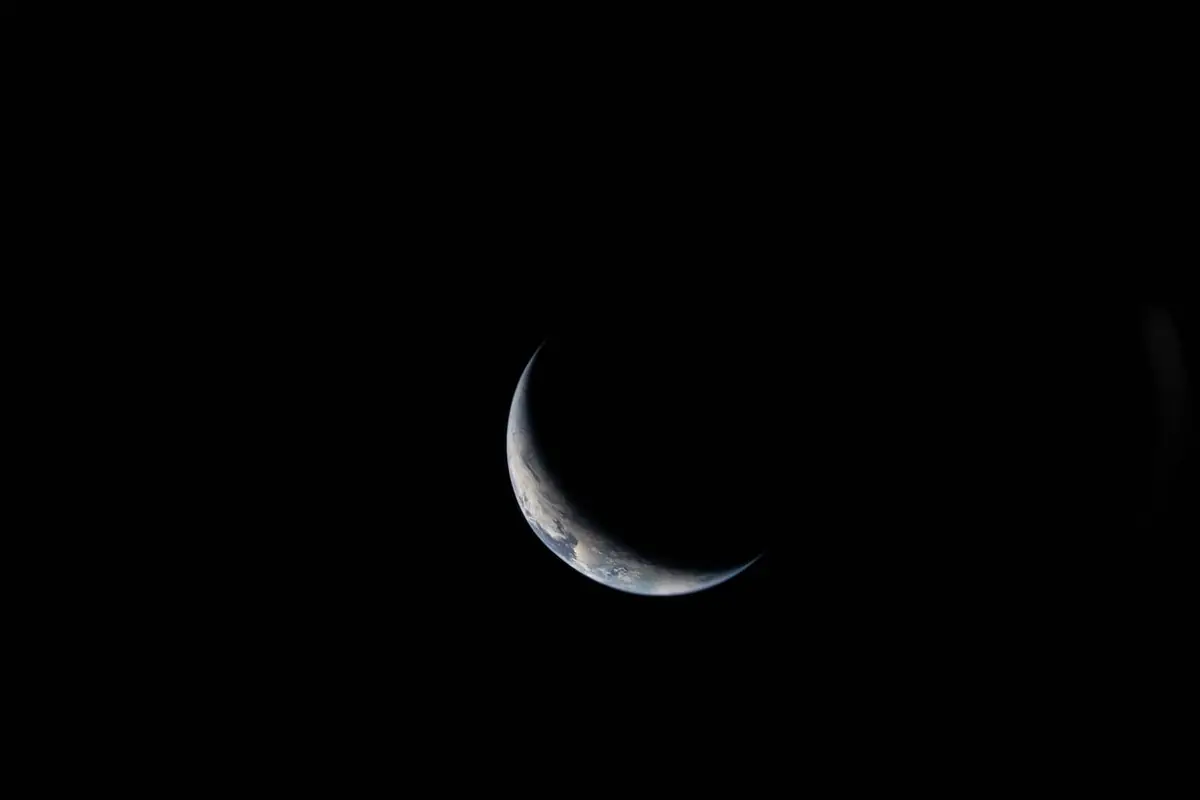
Earth through an Orion window on the second day. Photo: NASA -
6 April
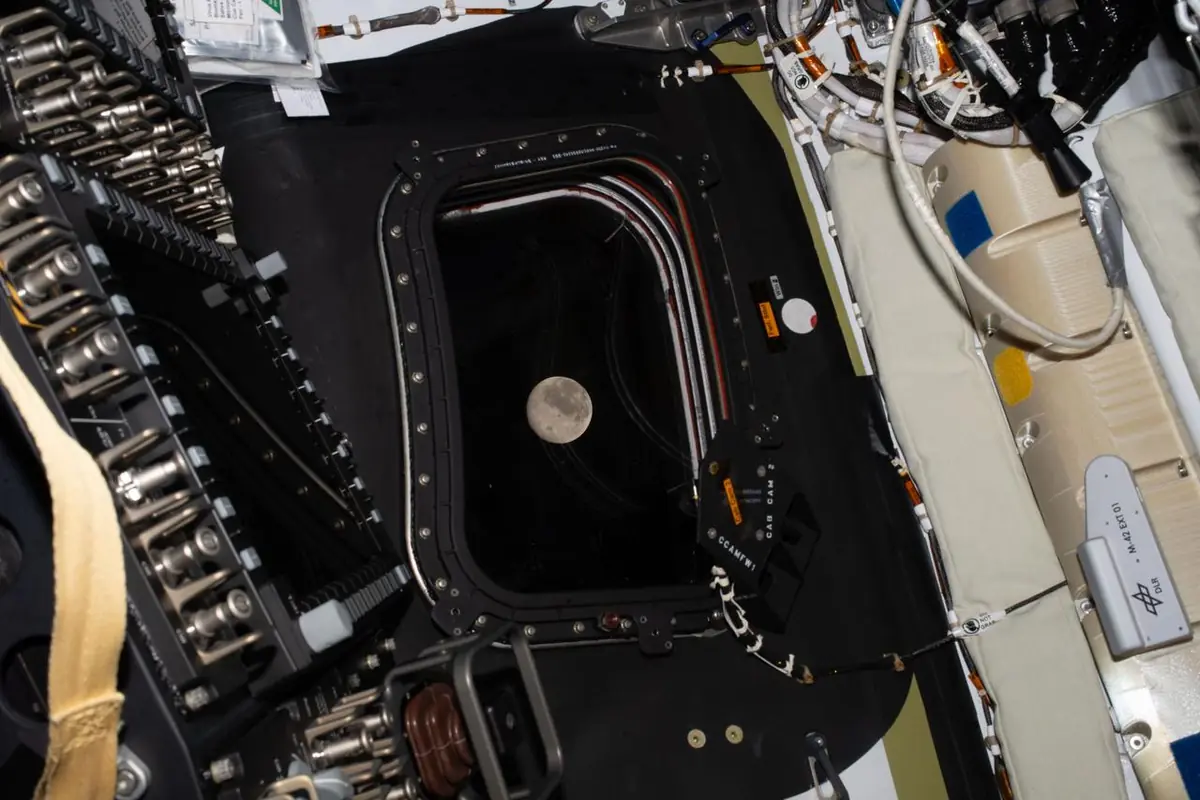
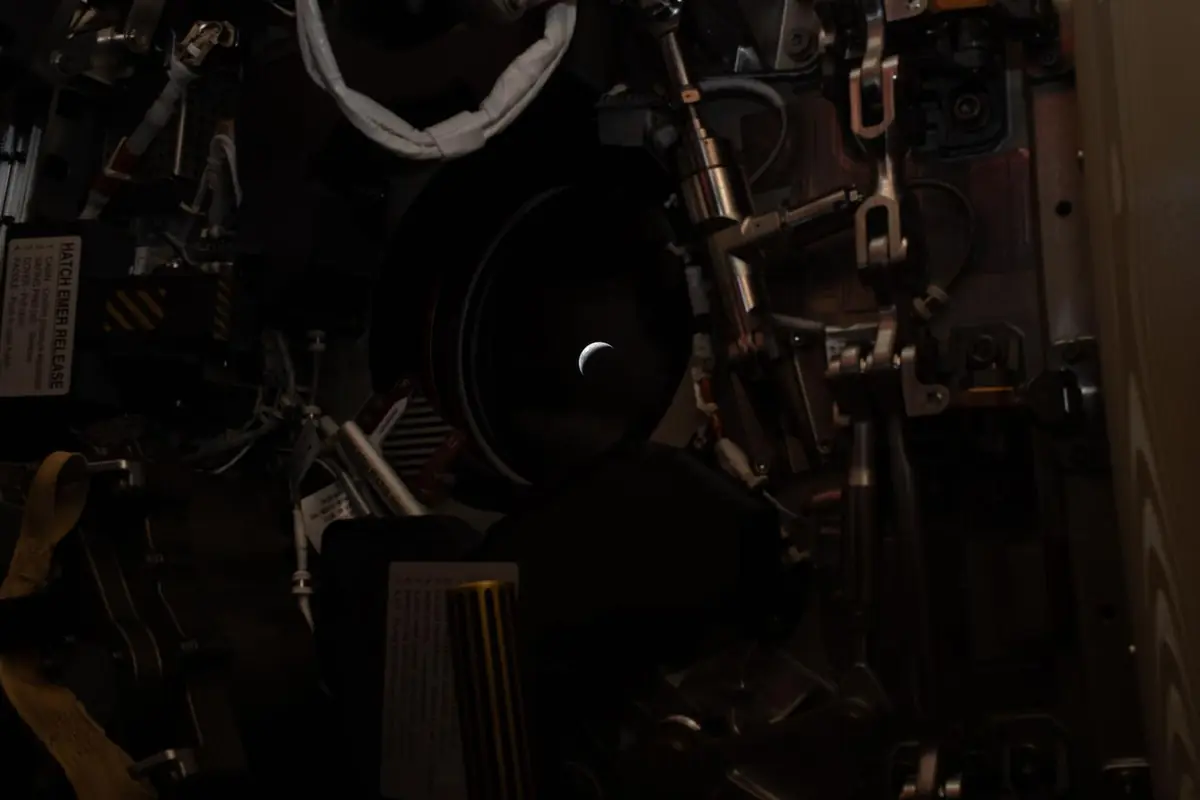
At 04:37 UTC Orion crossed into the Moon's sphere of influence, where its gravity pulls harder than Earth's. Before sleeping, the crew took one more picture of the Moon in the window.
We are now falling to the Moon rather than rising away from Earth.
Christina Koch 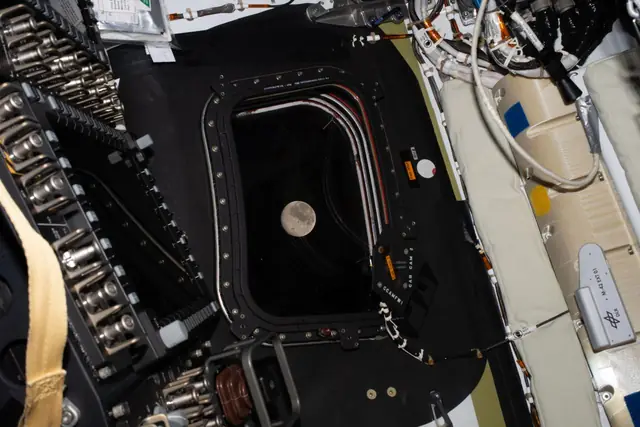
Goodnight Moon: the last picture before sleep on the fifth day. Photo: NASA -
6 April
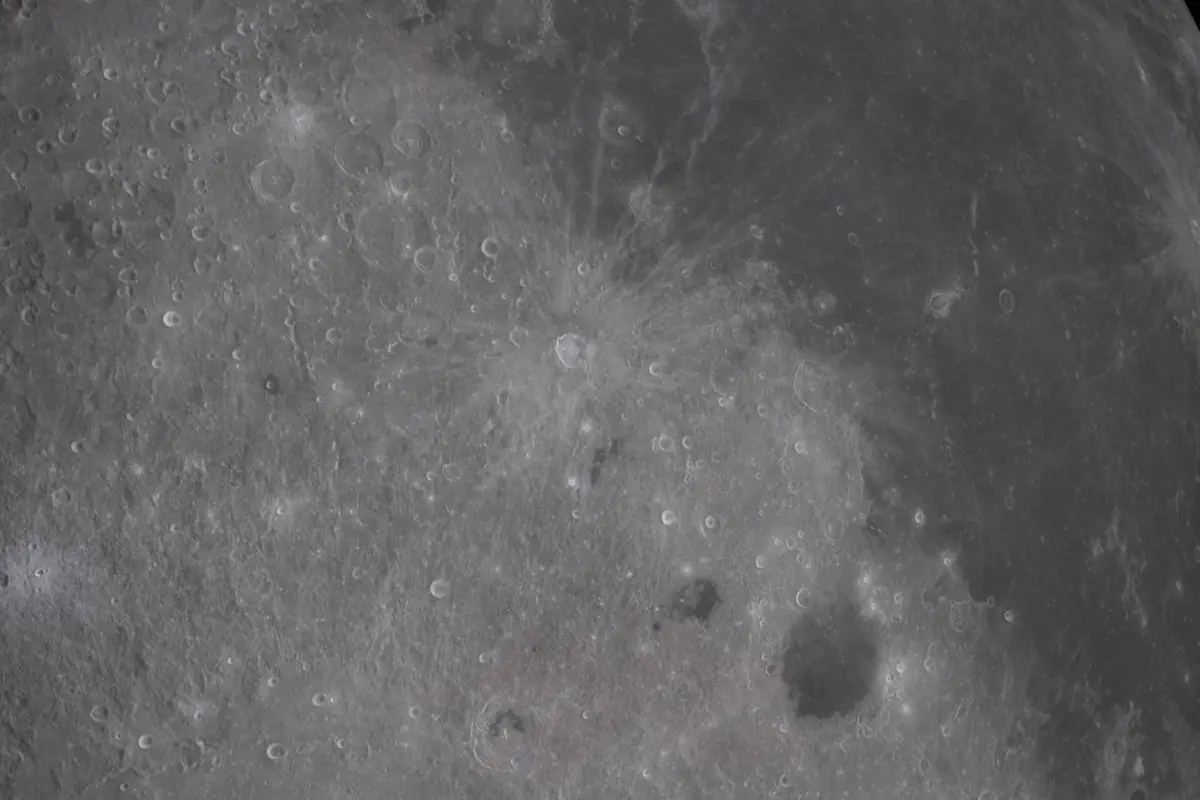
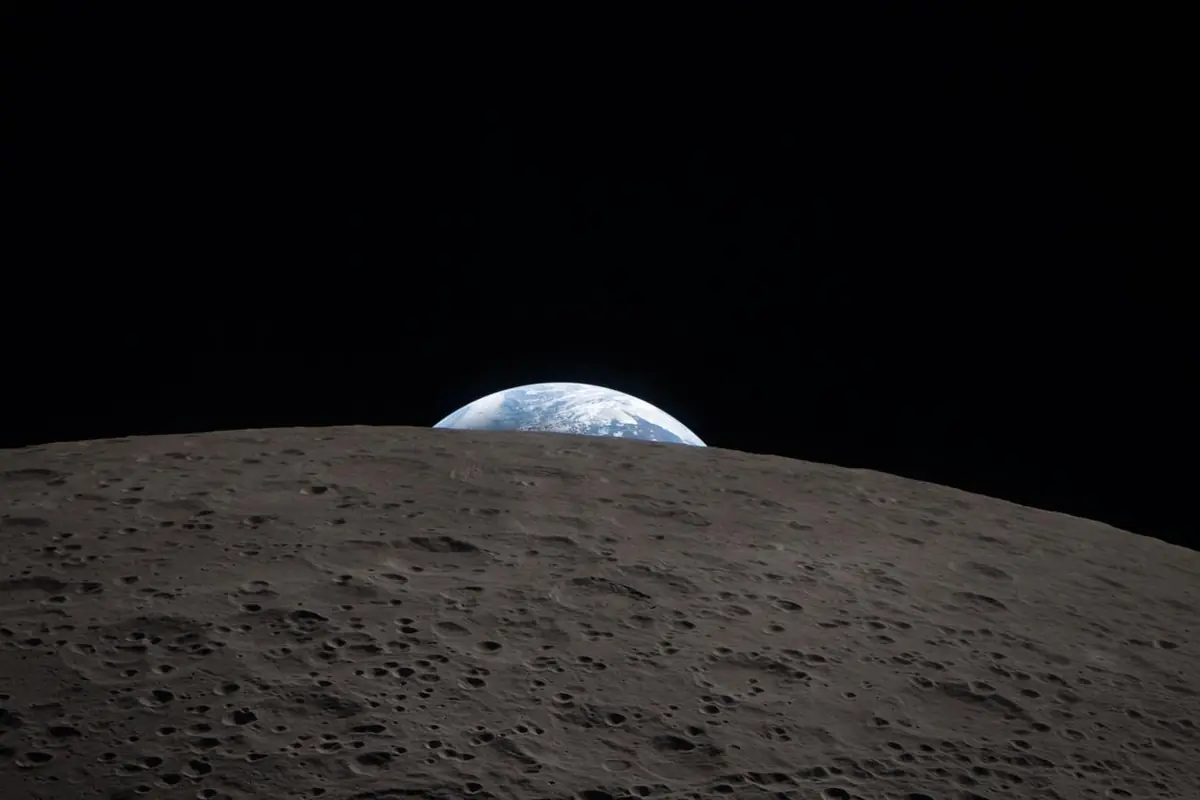
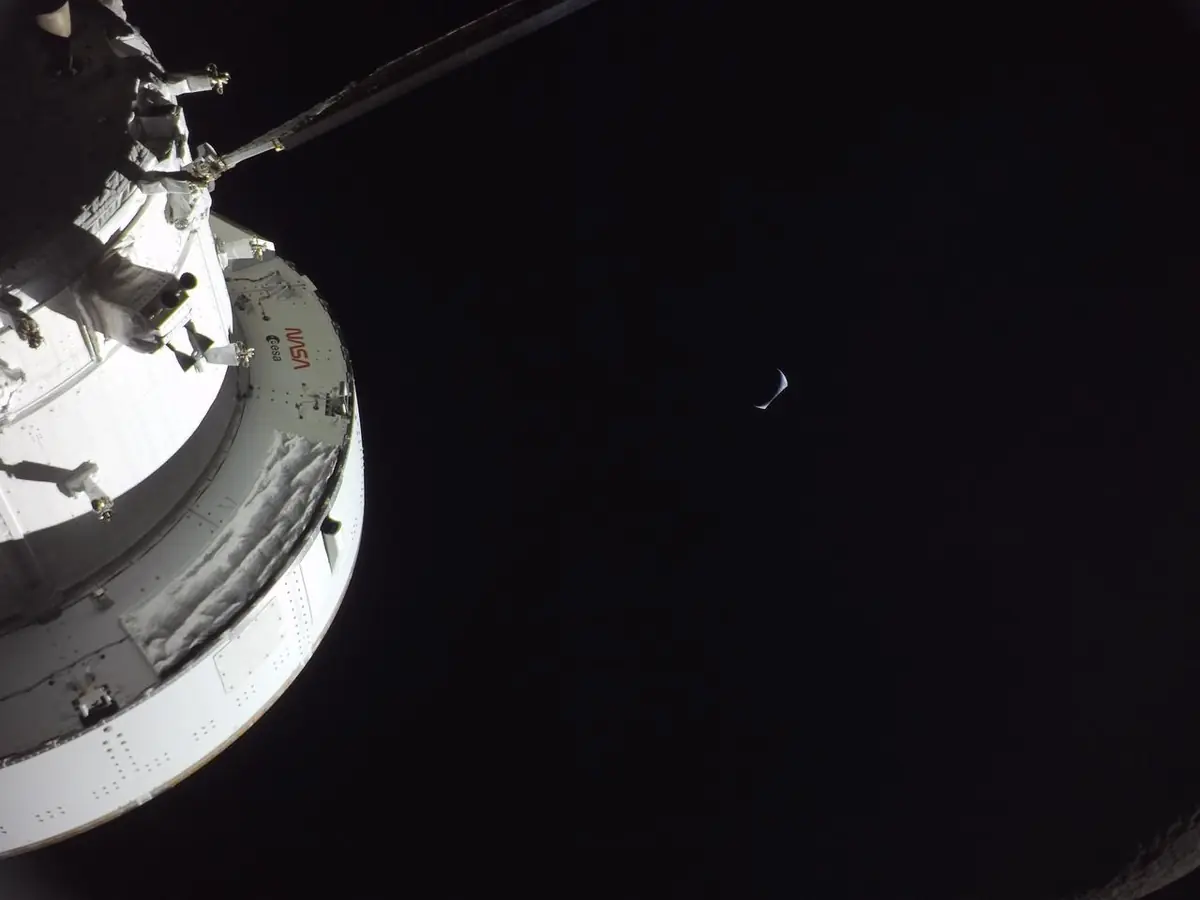
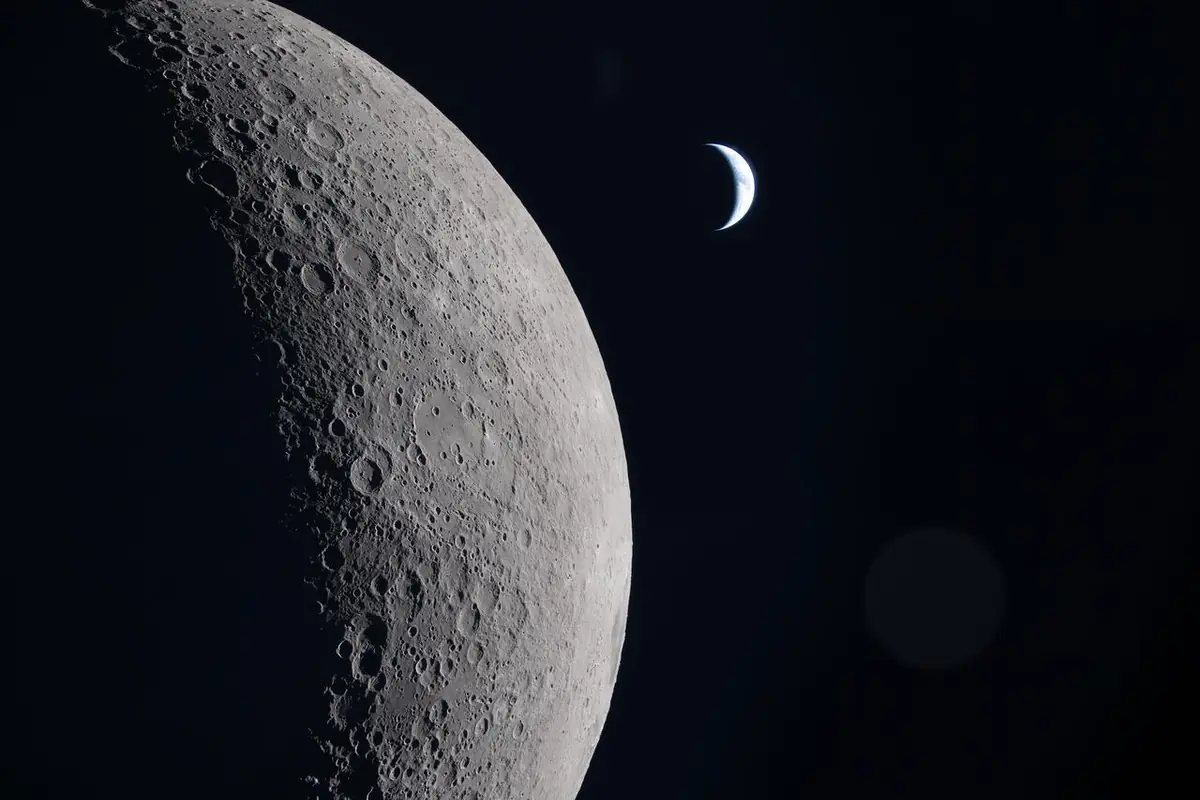
Orion passed 6,545 km4,067 miles above the far side, and the crew saw parts of it no human eye had seen. They broke Apollo 13's 1970 record of 400,171 km248,655 miles and reached 406,771 km252,756 miles from Earth. During the seven-hour flyby they took thousands of pictures and watched Earth set behind the Moon.
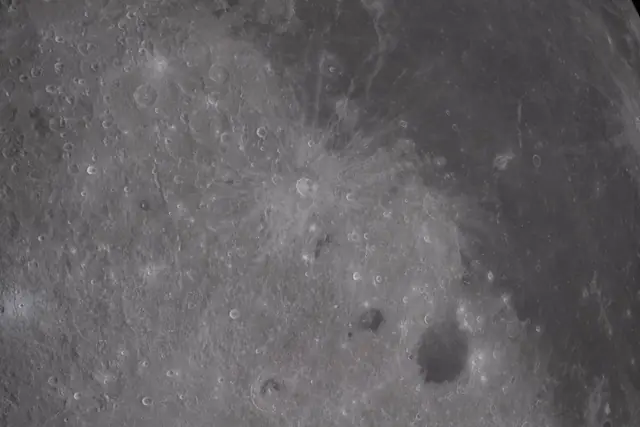
Across the line between the near and far sides. The pale swirl is Reiner Gamma. Photo: NASA -
6 April
The crew asked to name two young, unnamed craters: Integrity, on the far side, after their capsule, and Carroll, on the edge of the near side, after Wiseman's late wife. Mission Control went quiet for nearly a minute before answering. The names were passed to the International Astronomical Union, which approves names on the Moon.
-
10 April
Orion hit the atmosphere at about 40,000 km/h25,000 mph and splashed down off San Diego at 5:07 p.m. Pacific time (00:07 UTC on 11 April). A NASA and military team lifted the crew by helicopter to the USS John P. Murtha, the first lunar recovery by NASA and the Defense Department since Apollo 17.
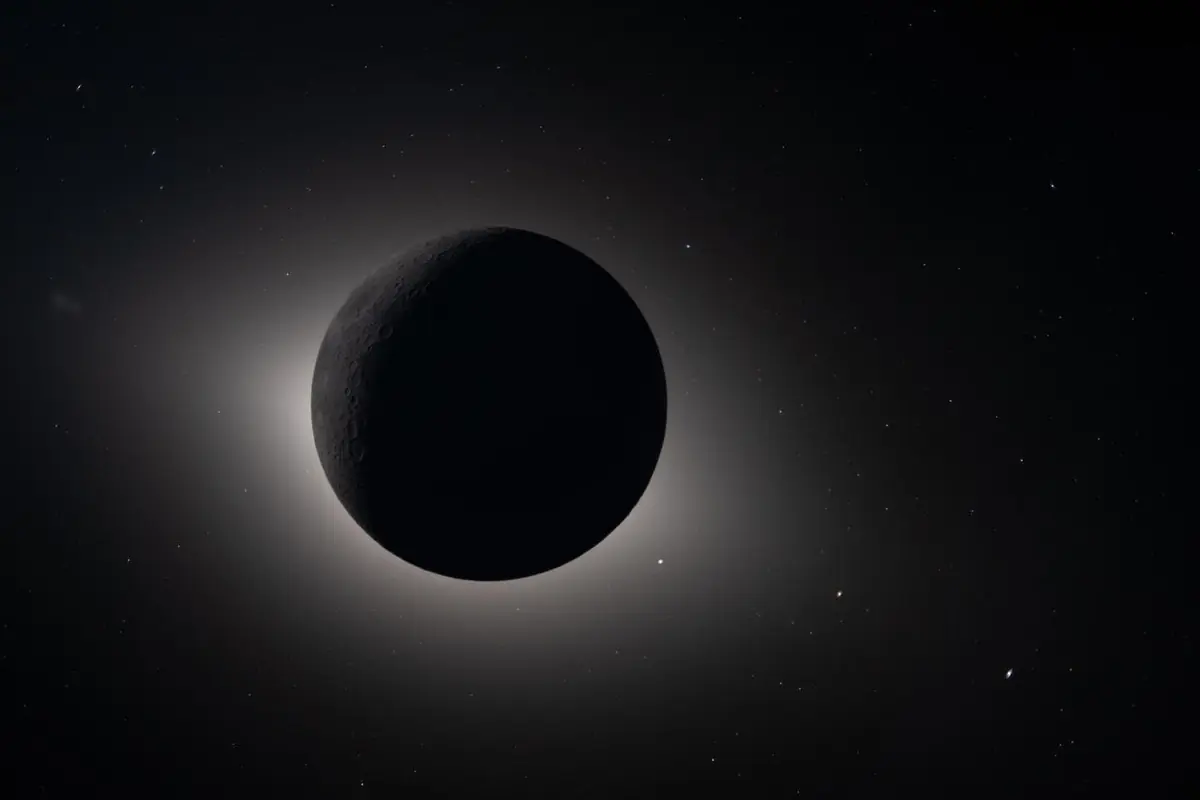
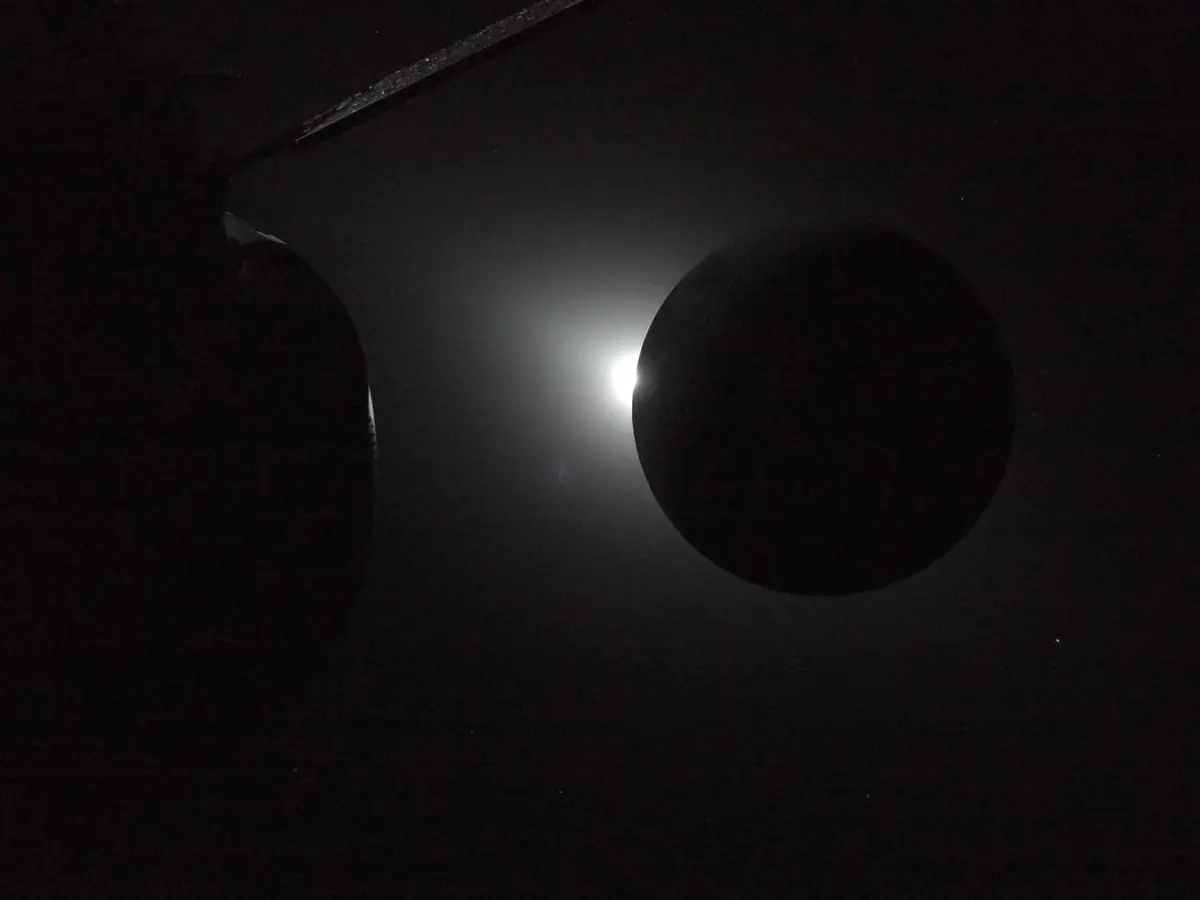
From behind the Moon the crew watched it cover the Sun for nearly 54 minutes, far longer than totality can last anywhere on Earth. A glow ringed the black disc; scientists are still working out how much of it was the Sun's corona and how much zodiacal light. With the Moon's night side facing them, the crew watched for flashes of meteoroids striking it, called down six, and marked them on a tablet in their own colors: Hansen red, Wiseman blue, Glover green.
Like a hole in the universe.
Sources
- Smithsonian Magazine'Like a hole in the universe': Victor Glover reflects on seeing a total solar eclipse while flying by the Moon
At closest approach the Moon spread across about 24° of the crew's sky, more than 46 times as wide as it looks from home and about two and a half fists held at arm's length. From the farthest point, Earth looked about 1.8° across, three and a half times the width of the Moon in our sky.
Wake-up calls
Every morning Mission Control woke the crew with a song they had picked, a tradition that began with Apollo.
-
1
Sleepyhead Young & Sick
Koch's choice, played after a four-hour nap on launch day.
Sources
- Scientific AmericanWhat's the deal with the Artemis II music? The crew finally gave us some answers
-
2
Green Light John Legend featuring André 3000
-
3
In a Daydream Freddy Jones Band
-
4
Pink Pony Club Chappell Roan
The recording stopped before the chorus.
I really was just singing it all day after that.
Christina Koch Sources
- Scientific AmericanWhat's the deal with the Artemis II music? The crew finally gave us some answers
Sources
- Scientific AmericanWhat's the deal with the Artemis II music? The crew finally gave us some answers
-
5
Working Class Heroes (Work) CeeLo Green
-
6
Good Morning Mandisa and TobyMac
Flyby day. Glover's wife swapped it in for one of his picks, and it became his favorite.
Sources
- Scientific AmericanWhat's the deal with the Artemis II music? The crew finally gave us some answers
-
7
Tokyo Drifting Denzel Curry and Glass Animals
Wiseman plays it every year on Florida holidays with his daughters.
Sources
- Scientific AmericanWhat's the deal with the Artemis II music? The crew finally gave us some answers
-
8
Under Pressure Queen and David Bowie
Suggested by Hansen's family, and his favorite.
Sources
- Scientific AmericanWhat's the deal with the Artemis II music? The crew finally gave us some answers
-
9
Lonesome Drifter Charley Crockett
-
10
Run to the Water Live
Splashdown day.
-
The crew piloted Orion manually to see how it handles, practice for docking with landers on future flights. They also tested its life support, emergency gear and the suits they wore for launch and reentry.
-
They took more than 7,000 pictures and documented terrain along the line between lunar day and night, where the lighting resembles the south pole. The AVATAR experiment studied how human tissue copes with deep-space radiation.
-
The toilet misbehaved for much of the trip, so the crew fell back on the bags Apollo astronauts used.
| Flight | Crew | Farthest from Earth | Closest to the Moon | Flight time | Sources |
|---|---|---|---|---|---|
| Apollo 13 1970 | 3 | 400,171 km248,655 miles | 254 km158 miles | 5 days 23 hours |
Sources
|
| Artemis I 2022 | None | 432,210 km268,563 miles | About 130 km80 miles | 25.5 days |
Sources
|
| Artemis II 2026 | 4 | 406,771 km252,756 miles | 6,545 km4,067 miles | 9 days 2 hours |
More from the flight
What comes next
NASA plans to land astronauts near the south pole in 2028; China plans its first landing before 2030. Plans as of November 2026.
-
Artemis III
NASA
Four astronauts on the Space Launch System and Orion, but not to the Moon: a planned 14 days in Earth orbit, docking first with a Blue Moon lander test article from Blue Origin and then with a Starship test article from SpaceX, to try out the rendezvous before a landing depends on it.
-
Artemis IV
NASA
The first Artemis landing, near the south pole. Astronauts will launch on Orion, and either a Starship refueled in Earth orbit or a Blue Moon Mark 2 lander will take them down. The first moonwalks are planned in a lighter Axiom Space suit, about half the weight of its full one.
-
Artemis V
NASA
A second landing, using a standardized version of the rocket, with about one landing a year planned after that.
-
A Moon base
NASA
In March 2026 NASA dropped its plan for a small station in lunar orbit and turned to a base on the surface near the south pole, estimated at about $20 billion over seven years.
-
Mengzhou and Lanyue
China Manned Space Agency
Two Long March 10 rockets will launch the Lanyue lander and the Mengzhou crew ship separately. They will dock in lunar orbit, and two of the three taikonauts will ride Lanyue to the surface, wearing Wangyu suits and driving a rover named Tansuo.
-
China's test flights
China Manned Space Agency
Mengzhou has passed a pad abort test and, in February 2026, an abort at peak aerodynamic pressure on a Long March 10 test flight; Lanyue passed a landing and takeoff test in August 2025. Still to come: an uncrewed Mengzhou in Earth orbit in 2027, an uncrewed Lanyue landing in 2028 and a full uncrewed rehearsal in 2029.
Plans that never flew
Programs cancelled, a private trip called off, a station set aside and a landing moved back.
-
Constellation
After the loss of Columbia, President George W. Bush set a goal in 2004 of returning astronauts to the Moon by 2020. NASA's Constellation program designed the Ares rockets and the Orion capsule, but only one test rocket, Ares I-X, flew, on 28 October 2009, and the program was cancelled in 2010. Orion survived and carried Artemis II.
-
dearMoon
The Japanese entrepreneur Yusaku Maezawa bought a flight around the Moon on SpaceX's Starship for himself and eight artists, announced in 2018 for 2023. With Starship not ready, he called it off on 1 June 2024.
-
Gateway
A small station for lunar orbit, largely built, where crews would have changed to their landers. NASA paused it in March 2026 and plans to reuse its parts on the surface.
-
Artemis III's landing
Artemis III was to be the first landing, near the south pole. In February 2026 NASA judged the jump from a flyby to a landing too big and made it a test flight in Earth orbit, moving the landing to Artemis IV.
Everyone who has gone
28 people have flown to the Moon, and 12 of them walked on it. Jim Lovell, John Young and Gene Cernan each went twice.
Walked on the Moon
Sources
- NASA History (R. W. Orloff)Apollo by the Numbers: A Statistical Reference, NASA SP-2000-4029
- NASA ScienceMoonwalkers
- NASANASA welcomes record-setting Artemis II moonfarers back to Earth
-
Apollo 8 December 1968
- Frank Borman
- Jim Lovell
- Bill Anders
-
Apollo 10 May 1969
- Tom Stafford
- John Young
- Gene Cernan
-
Apollo 11 July 1969
- Neil Armstrong (walked on the Moon)
- Michael Collins
- Buzz Aldrin (walked on the Moon)
-
Apollo 12 November 1969
- Pete Conrad (walked on the Moon)
- Richard Gordon
- Alan Bean (walked on the Moon)
-
Apollo 13 April 1970
- Jim Lovell
- Jack Swigert
- Fred Haise
-
Apollo 14 February 1971
- Alan Shepard (walked on the Moon)
- Stuart Roosa
- Edgar Mitchell (walked on the Moon)
-
Apollo 15 July 1971
- David Scott (walked on the Moon)
- Alfred Worden
- James Irwin (walked on the Moon)
-
Apollo 16 April 1972
- John Young (walked on the Moon)
- Ken Mattingly
- Charles Duke (walked on the Moon)
-
Apollo 17 December 1972
- Gene Cernan (walked on the Moon)
- Ronald Evans
- Harrison Schmitt (walked on the Moon)
-
Artemis II April 2026
- Reid Wiseman
- Victor Glover
- Christina Koch
- Jeremy Hansen
References
46 sources and photo credits
Numbers match the sources listed under each (i). Photographs are NASA's, from the NASA Image and Video Library; each credit links to the original record. None shows the crew. NASA does not endorse this site.
- NASA History (R. W. Orloff). Apollo by the Numbers: A Statistical Reference, NASA SP-2000-4029
- NASA. NASA welcomes record-setting Artemis II moonfarers back to Earth
- Associated Press (via OPB). Artemis II astronauts return from Moon with a splashdown to close out a record-breaking lunar voyage
- NASA Science. Moonwalkers
- Smithsonian National Air and Space Museum. Meet the crew of Artemis II
- NASA. Reid Wiseman, NASA astronaut: biography
- NPR. Astronauts suggest naming a Moon crater 'Carroll' after their commander's late wife
- National Geographic. NASA reveals Artemis II crew, the first Moon astronauts in 50 years
- NASA. Victor J. Glover, Jr., NASA astronaut: biography
- NPR. A child's dream to 'drive' a space shuttle propels him toward a historic NASA mission
- NASA. Christina H. Koch, NASA astronaut: biography
- Canadian Space Agency. Biography of Jeremy Hansen
- CBC. Fear, family, and space food: Jeremy Hansen gets personal ahead of moon mission
- CTV News. How Dr. Catherine Hansen navigates Earth while her husband is out of this world
- NASA Image and Video Library. Goodnight Moon (art002e009210)
- Space.com. Splashdown! NASA's Artemis 1 Orion capsule lands in Pacific to end epic moon mission
- NASA Image and Video Library. A breathtaking Earthset from Orion (art002e021278)
- CTV News (AP). Artemis II astronauts follow Apollo tradition of naming lunar features after loved ones
- NASA Image and Video Library. Artemis II in eclipse (art002e009301)
- NASA Image and Video Library. A sunrise for Orion (art002e009575)
- NASA Image and Video Library. Artemis II crew annotating impact flashes (art002e016252)
- Smithsonian Magazine. 'Like a hole in the universe': Victor Glover reflects on seeing a total solar eclipse while flying by the Moon
- NASA Space Science Data Coordinated Archive. Moon fact sheet
- NASA Space Science Data Coordinated Archive. Earth fact sheet
- Space.com. Moon music: a playlist of the Artemis 2 crew's wake-up songs
- Scientific American. What's the deal with the Artemis II music? The crew finally gave us some answers
- NBC New York (AP). Artemis II astronauts return to Earth after historic Moon mission
- Scientific American. NASA's Artemis I mission successfully returns from the Moon
- NASA. Splashdown! NASA's Orion returns to Earth after historic Moon mission
- NASA. NASA shares plans to accelerate Artemis, return to Moon (October 2026)
- NBC News. NASA announces major overhaul to its Artemis Moon program
- NASA. NASA strengthens Artemis: adds mission, refines overall architecture (February 2026)
- Space.com. NASA's lunar Gateway space station is out. Moon bases are in
- Reuters (via The Express Tribune). NASA to spend $20 billion on Moon base, cancel orbiting lunar station
- CGTN. China unveils detailed two-launch plan for first manned Moon landing, 1 November 2026
- Global Times. China aims for manned Moon landing before 2030, with two taikonauts set to touch down
- Gov.cn (CGTN). China reveals names of moon-landing spacesuit, manned lunar rover
- China Daily. China steps up preparations for planned 2030 crewed lunar mission
- CGTN. China conducts low-altitude flight test for Long March-10 rocket, 11 February 2026
- China Daily. Lanyue lander completes landing and takeoff test, August 2025
- Space.com. China lays out plans to land astronauts on the Moon before 2030
- The Planetary Society. Space in transition: how Obama's White House charted a new course for NASA
- NASA Technical Reports Server. Constellation's first flight test: Ares I-X
- dearMoon. Notice of project cancellation, 1 June 2024
- Space.com. Japanese billionaire cancels private flight around the Moon on SpaceX's giant Starship
- The Register. Goodbye, Lunar Gateway: NASA ditches Moon station for Moon base