
Nature calendar · Bats
Kasanka bat migration
Kasanka National Park, Zambia · Mid-October to December, peak November · Times in Central Africa time
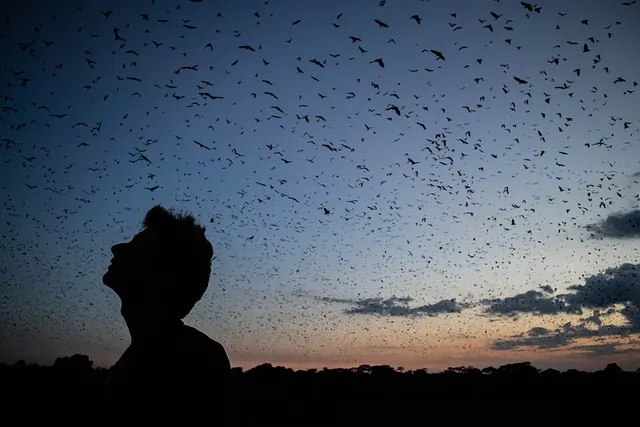
Between October and December, eight to ten million straw-coloured fruit bats come to Kasanka, Africa's greatest mammal migration; at dusk some 7,500 a second lift from the forest.
National Geographic (2015), Witness Africa's other epic migration: eight to ten million fruit bats at Kasanka between October and December; at dusk some 7,500 a second lift from the forest. Source · All sources
Estimates by eye ran from one to ten million; a count on video by the Max Planck Institute of Animal Behavior put the colony at 750,000 to 1,000,000, still the largest bat colony by biomass in the world.
Max Planck Institute of Animal Behavior (2023), Counting Africa's largest bat colony: 750,000 to 1,000,000 bats, the largest bat colony by biomass in the world; past estimates by eye ranged from 1 to 10 million. Source · All sources
Predicted nights in 2049
Times are Central Africa time.
Evenings in October
Fri 15 to Sun 31 Oct 2049
Possible
| Evening | Watch | Rating |
|---|---|---|
| Fri 15 Oct | 5:26 PM to 6:36 PM | Possible |
| Sat 16 Oct | 5:26 PM to 6:36 PM | Possible |
| Sun 17 Oct | 5:26 PM to 6:36 PM | Possible |
| Mon 18 Oct | 5:26 PM to 6:36 PM | Possible |
| Tue 19 Oct | 5:27 PM to 6:37 PM | Possible |
| Wed 20 Oct | 5:27 PM to 6:37 PM | Possible |
| Thu 21 Oct | 5:27 PM to 6:37 PM | Possible |
| Fri 22 Oct | 5:27 PM to 6:37 PM | Possible |
| Sat 23 Oct | 5:27 PM to 6:37 PM | Possible |
| Sun 24 Oct | 5:28 PM to 6:38 PM | Possible |
| Mon 25 Oct | 5:28 PM to 6:38 PM | Possible |
| Tue 26 Oct | 5:28 PM to 6:38 PM | Possible |
| Wed 27 Oct | 5:28 PM to 6:38 PM | Possible |
| Thu 28 Oct | 5:28 PM to 6:38 PM | Possible |
| Fri 29 Oct | 5:29 PM to 6:39 PM | Possible |
| Sat 30 Oct | 5:29 PM to 6:39 PM | Possible |
| Sun 31 Oct | 5:29 PM to 6:39 PM | Possible |
Evenings in November
Mon 1 to Tue 30 Nov 2049
Likely
| Evening | Watch | Rating |
|---|---|---|
| Mon 1 Nov | 5:30 PM to 6:40 PM | Likely |
| Tue 2 Nov | 5:30 PM to 6:40 PM | Likely |
| Wed 3 Nov | 5:30 PM to 6:40 PM | Likely |
| Thu 4 Nov | 5:30 PM to 6:40 PM | Likely |
| Fri 5 Nov | 5:31 PM to 6:41 PM | Likely |
| Sat 6 Nov | 5:31 PM to 6:41 PM | Likely |
| Sun 7 Nov | 5:31 PM to 6:41 PM | Likely |
| Mon 8 Nov | 5:32 PM to 6:42 PM | Likely |
| Tue 9 Nov | 5:32 PM to 6:42 PM | Likely |
| Wed 10 Nov | 5:33 PM to 6:43 PM | Likely |
| Thu 11 Nov | 5:33 PM to 6:43 PM | Likely |
| Fri 12 Nov | 5:33 PM to 6:43 PM | Likely |
| Sat 13 Nov | 5:34 PM to 6:44 PM | Likely |
| Sun 14 Nov | 5:34 PM to 6:44 PM | Likely |
| Mon 15 Nov | 5:35 PM to 6:45 PM | Likely |
| Tue 16 Nov | 5:35 PM to 6:45 PM | Likely |
| Wed 17 Nov | 5:35 PM to 6:45 PM | Likely |
| Thu 18 Nov | 5:36 PM to 6:46 PM | Likely |
| Fri 19 Nov | 5:36 PM to 6:46 PM | Likely |
| Sat 20 Nov | 5:37 PM to 6:47 PM | Likely |
| Sun 21 Nov | 5:37 PM to 6:47 PM | Likely |
| Mon 22 Nov | 5:38 PM to 6:48 PM | Likely |
| Tue 23 Nov | 5:38 PM to 6:48 PM | Likely |
| Wed 24 Nov | 5:39 PM to 6:49 PM | Likely |
| Thu 25 Nov | 5:39 PM to 6:49 PM | Likely |
| Fri 26 Nov | 5:40 PM to 6:50 PM | Likely |
| Sat 27 Nov | 5:40 PM to 6:50 PM | Likely |
| Sun 28 Nov | 5:41 PM to 6:51 PM | Likely |
| Mon 29 Nov | 5:41 PM to 6:51 PM | Likely |
| Tue 30 Nov | 5:42 PM to 6:52 PM | Likely |
Evenings in December
Wed 1 to Fri 31 Dec 2049
Possible
| Evening | Watch | Rating |
|---|---|---|
| Wed 1 Dec | 5:43 PM to 6:53 PM | Possible |
| Thu 2 Dec | 5:43 PM to 6:53 PM | Possible |
| Fri 3 Dec | 5:44 PM to 6:54 PM | Possible |
| Sat 4 Dec | 5:44 PM to 6:54 PM | Possible |
| Sun 5 Dec | 5:45 PM to 6:55 PM | Possible |
| Mon 6 Dec | 5:45 PM to 6:55 PM | Possible |
| Tue 7 Dec | 5:46 PM to 6:56 PM | Possible |
| Wed 8 Dec | 5:46 PM to 6:56 PM | Possible |
| Thu 9 Dec | 5:47 PM to 6:57 PM | Possible |
| Fri 10 Dec | 5:47 PM to 6:57 PM | Possible |
| Sat 11 Dec | 5:48 PM to 6:58 PM | Possible |
| Sun 12 Dec | 5:49 PM to 6:59 PM | Possible |
| Mon 13 Dec | 5:49 PM to 6:59 PM | Possible |
| Tue 14 Dec | 5:50 PM to 7:00 PM | Possible |
| Wed 15 Dec | 5:50 PM to 7:00 PM | Possible |
| Thu 16 Dec | 5:51 PM to 7:01 PM | Possible |
| Fri 17 Dec | 5:51 PM to 7:01 PM | Possible |
| Sat 18 Dec | 5:52 PM to 7:02 PM | Possible |
| Sun 19 Dec | 5:52 PM to 7:02 PM | Possible |
| Mon 20 Dec | 5:53 PM to 7:03 PM | Possible |
| Tue 21 Dec | 5:53 PM to 7:03 PM | Possible |
| Wed 22 Dec | 5:54 PM to 7:04 PM | Possible |
| Thu 23 Dec | 5:54 PM to 7:04 PM | Possible |
| Fri 24 Dec | 5:55 PM to 7:05 PM | Possible |
| Sat 25 Dec | 5:55 PM to 7:05 PM | Possible |
| Sun 26 Dec | 5:56 PM to 7:06 PM | Possible |
| Mon 27 Dec | 5:56 PM to 7:06 PM | Possible |
| Tue 28 Dec | 5:56 PM to 7:06 PM | Possible |
| Wed 29 Dec | 5:57 PM to 7:07 PM | Possible |
| Thu 30 Dec | 5:57 PM to 7:07 PM | Possible |
| Fri 31 Dec | 5:58 PM to 7:08 PM | Possible |
Where it happens
Kasanka National Park, Zambia · 12.6° S, 30.3° E

Drag or scroll to move around the map; hover or tap a dot for another spectacle.
How we predict it
The bats arrive around mid-October and leave toward the end of December; November is the surest month.
Lonely Planet, Bat migration in Kasanka National Park: the bats arrive around mid-October and leave toward the end of December; November is the surest month. Source · All sources
In 2000 and 2001 the evening emergence began between 5:35 and 6:54 p.m. and lasted 28 minutes on average.
Stuart and Stuart (2003), The straw-coloured fruit bat colony in Kasanka National Park, Zambia: in 2000 and 2001 emergence began between 17:35 and 18:54 and lasted 28 minutes on average; the colony thinned from 3 December in 2001 and in the last week of December in 2000. Source · All sources
We list every evening from 15 October to 31 December, November as Likely, from 30 minutes before sunset to 40 minutes after.
Stuart and Stuart (2003), The straw-coloured fruit bat colony in Kasanka National Park, Zambia: in 2000 and 2001 emergence began between 17:35 and 18:54 and lasted 28 minutes on average; the colony thinned from 3 December in 2001 and in the last week of December in 2000. Source · All sources
Ratings: Best is what the source names as the peak; Likely and Possible follow the source's main and side months or nights; Unlikely is a month the rule expects nothing. Moon phases, sunset and dawn come from NASA JPL's DE440 ephemeris.
Watching it
Visitors set out from Wasa Lodge in open trucks about half an hour before dusk.
Smithsonian Magazine, The world's largest mammal migration is taking place in Zambia: setting out from Wasa Lodge in an open truck about half an hour before dusk. Source · All sources
What the dates cannot promise
The colony's dates shift: in 2001 it thinned from 3 December, in 2000 only in the last week of December.
Stuart and Stuart (2003), The straw-coloured fruit bat colony in Kasanka National Park, Zambia: in 2000 and 2001 emergence began between 17:35 and 18:54 and lasted 28 minutes on average; the colony thinned from 3 December in 2001 and in the last week of December in 2000. Source · All sources
More on the nature calendar
- California grunion runsCabrillo Beach, San Pedro · March to August
- Nassau grouper spawning, Little CaymanWest End, Little Cayman · January or February
- Whale sharks at Gladden SpitGladden Spit, off Placencia · March to June, after the full moon
- Horseshoe crab spawning, Delaware BayDuPont Nature Center, Mispillion Harbor, Delaware · May and June
- Christmas Island red crab spawningFlying Fish Cove, Christmas Island · November to January
- Great Barrier Reef coral spawningGreat Barrier Reef, off Cairns · October to December
- Ningaloo coral spawningCoral Bay, Ningaloo Reef · March and April
- Florida Keys coral spawningKey Largo, Florida Keys · August and September
- Flower Garden Banks coral spawningFlower Garden Banks, Gulf of Mexico · August, sometimes September
- Coral spawning at Sesoko, OkinawaSesoko Island, Motobu · May or June
- Rice coral spawning, Kāneʻohe BayKāneʻohe Bay, Oʻahu, Hawaii · June and July, after the new moon
- Palolo rising, SamoaTutuila · October or November
- Olive ridley arribadas at OstionalOstional National Wildlife Refuge, Guanacaste · All year, biggest July to November
- Box jellyfish at WaikīkīWaikīkī Beach, Oʻahu, Hawaii · Every month, 8 to 10 days after the full moon
- Bermuda firewormsFerry Reach · Summer and autumn
- Puerto Rico's bioluminescent baysMosquito Bay, Vieques · All year, best near new moon
- Firefly squid of Toyama BayNamerikawa, Toyama Bay · March to May, near new moon
- Blue tears of the Matsu IslandsBeihai Tunnel, Nangan · April to September, best April to June
- Lunar rainbow at Victoria FallsVictoria Falls rainforest · Three nights at every full moon
- Moonbow at Cumberland FallsCumberland Falls State Resort Park, Kentucky · Five nights around every full moon
- Moonbows at Yosemite FallsYosemite Falls, Yosemite National Park, California · April to June, around the full moon
- Congress Avenue Bridge batsCongress Avenue Bridge, Austin, Texas · Every evening, March to October
- Penguin Parade, Phillip IslandSummerland Beach, Phillip Island · Every evening, all year
- Sort Sol, the black sunTønder Marsh · Early March to mid-April, mid-August to October
- The Severn BoreMinsterworth, Gloucestershire · Spring tides all year
- Great tides at Mont-Saint-MichelMont-Saint-Michel, Normandy · Spring tides all year, biggest near the equinoxes
- The Qiantang River tidal boreYanguan, Haining, Zhejiang · Big tides every lunar month; biggest in the eighth (September or October)
- Horsetail Fall firefall, YosemiteHorsetail Fall, El Capitan, Yosemite · Mid to late February, at sunset
- Diamond Fuji and Pearl Fuji, Lake YamanakaLake Yamanaka, Yamanashi · Mid-October to late February at sunset; Pearl Fuji at some full moons
- The Sun's return to LongyearbyenLongyearbyen, Svalbard · 8 March, around noon
- Midnight sun at NordkappNorth Cape plateau, Magerøya · Mid-May to late July
- Bau Nyale sea worms, LombokSeger Beach, Kuta, Central Lombok · February or March, before dawn
- Sandhill cranes on the Platte RiverRowe Sanctuary, Gibbon, Nebraska · March to early April, at sunset
- Silver eels on dark autumn nightsBurrishoole, County Mayo · September to December, on dark nights
- Kapenta rig lights on Lake KaribaKariba, Lake Kariba · All year, between full moons
- Gulf grunion by day, Puerto PeñascoPuerto Peñasco, Sonora · February to May, after new and full moons